
Concrete Patios
- Home
- Our Services
- Concrete Patios
Concrete Patios Designed Around How You Live Outside
A concrete patio gives your backyard a stable, level place for dining, grilling, and relaxing that holds up to foot traffic, furniture, and seasonal change. AR5 Concrete & Construction builds residential patios sized and shaped for the way your household uses the yard, whether that means a compact sitting area by the back door or a larger slab that connects to a fire pit or outdoor kitchen.
Patio layout starts with sun exposure, drainage, and access from the house. We look at where water flows, where the door opens, and where furniture will sit, then recommend a slab size and position that feels natural. Planning this early avoids awkward transitions and makes the finished patio easier to use every day.
Base Preparation, Grading, and Finishes
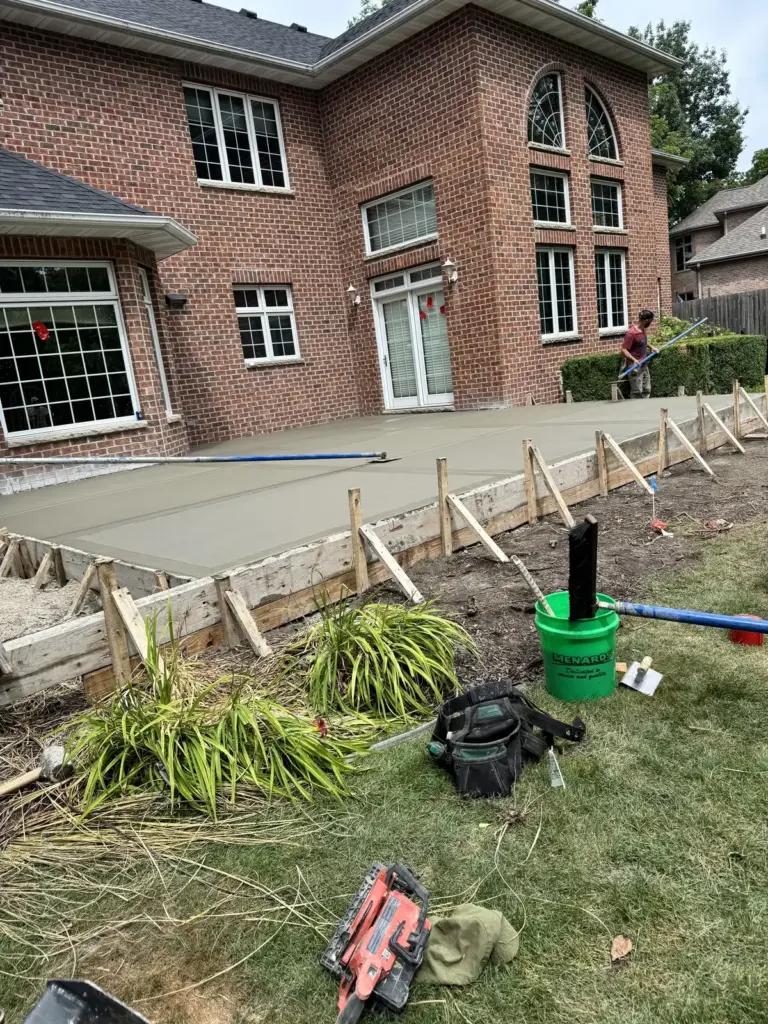
A patio’s lifespan depends on what happens before the concrete arrives. The area is excavated to the planned depth, the base material is placed and compacted, and the ground is graded so rainwater moves away from the house instead of pooling against the foundation. Forms are set to the right height, reinforcement goes where it is needed, and the surface is finished with a texture that gives reliable footing when wet. Broom, light trowel, and exposed aggregate finishes are all options.
Durable Surfaces Made for Outdoor Living
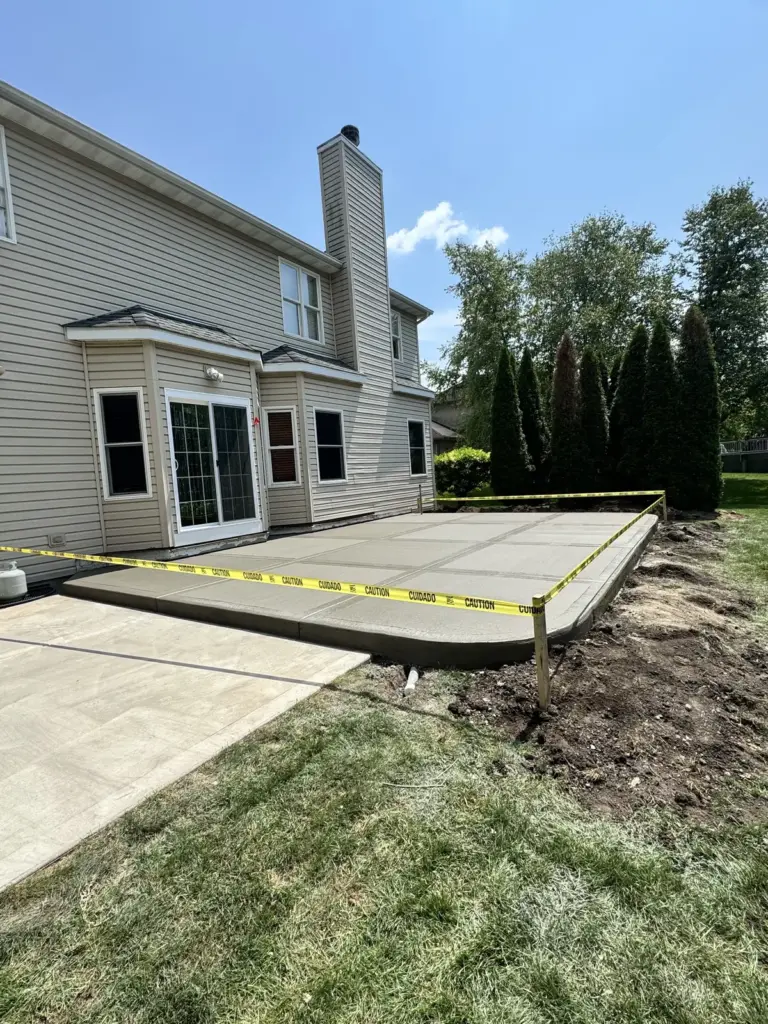
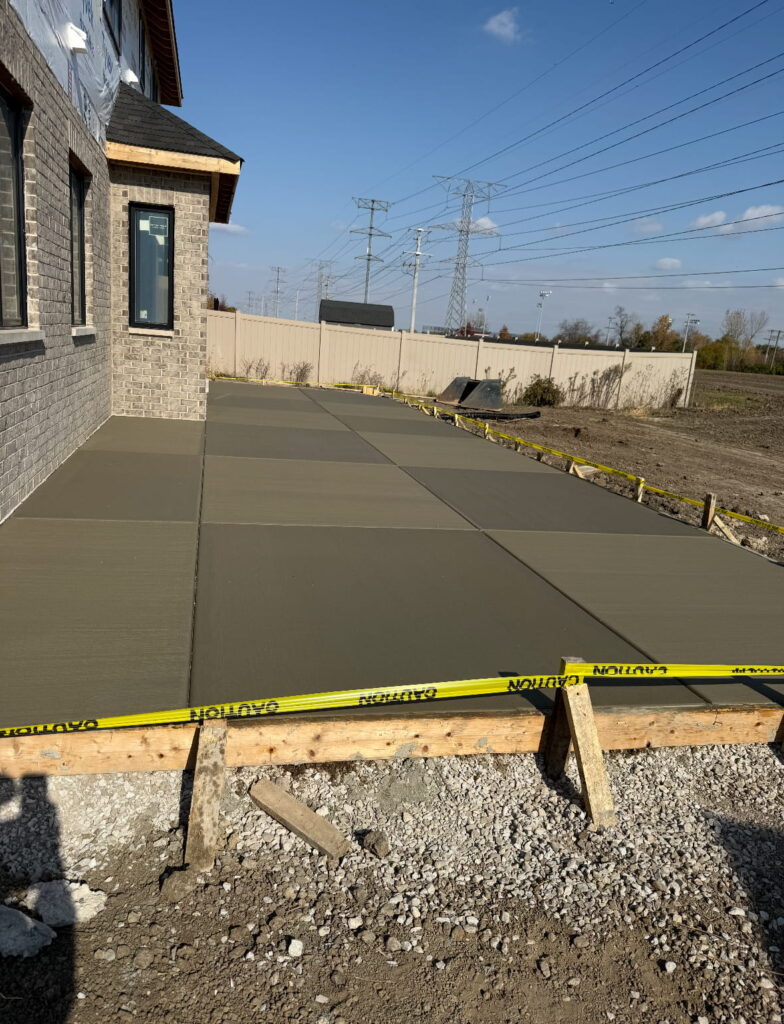
Concrete holds up to ordinary outdoor use better than many loose or organic surfaces, it does not shift the way pavers can when the ground settles, and it creates a firm base for tables, chairs, and planters. A well-built patio is easy to keep clean with a hose and occasional scrubbing. If you plan to add a fire pit, pergola, or outdoor kitchen later, we can plan the slab so those features fit without rework. Homeowners across DuPage, Will, Kendall, and Grundy counties often plan these spaces around existing decks and walkways.
Ready to Plan Your Backyard Patio?
Tell us about the space you have in mind, how you plan to use it, and which county your home is in. We will schedule an on-site review and send a no-obligation estimate that covers size, materials, finish options, and timing.
Patio Questions Homeowners Ask
Practical answers about planning, building, and using a concrete patio.
Patio size depends on the furniture, traffic paths, and activities you want to fit. A common approach is to leave room to pull out chairs from a dining table and walk around them comfortably. Measuring the space and sketching how you use it helps. We suggest dimensions during the site visit based on your yard and the layout of your home.
Some hairline cracking is normal, because concrete shrinks slightly as it cures. Control joints are placed at planned intervals so any cracks follow straight, predictable lines rather than wandering across the slab. Proper base preparation and drainage reduce the chance of larger cracks forming later, and small cracks can be sealed before they grow.
Yes, and planning these features early makes a real difference. The slab can be sized to include space for a fire pit, grill island, or seating wall, and the base can be prepared to support heavier built-in elements. Check local rules and clearances for fire features before you finalize the layout, and we can point out where those details matter.
A broom finish offers good traction and a classic look. A light trowel finish feels smoother underfoot. Exposed aggregate and decorative options add visual interest but require more planning. The best choice depends on how much sun the patio gets, whether it will be used barefoot, and the style of your home.
Clear the area of plants, toys, and furniture, and mark the edges so the crew knows exactly where the slab will go. Tell us about underground utilities, sprinkler lines, or irrigation before work begins. Moving planters and removing loose landscape edging helps the project stay on schedule.
Foot traffic is usually fine after a day or two, once the surface has hardened. Heavy furniture and grills should wait until the concrete has cured further, generally about a week or more depending on temperature and humidity. Avoid de-icing salts during the first winter, and seal the surface once it has fully cured.